
The Psychology of Scarcity: Using urgency without being sleazy
We’ve all seen it: a giant, flashing red countdown timer on a website selling a "masterclass" that supposedly expires in ten minutes... only to refresh the page and see the timer start all over again.
That isn't marketing; it’s a carnival trick. And in 2026, your audience is far too savvy to fall for it.
The psychology of scarcity is one of the most powerful influencers of human behavior. It’s rooted in our evolutionary "FOMO" (Fear Of Missing Out). When an item is perceived as rare, our brains assign it higher value. But there is a thin line between persuasive and predatory. Once you’re seen as predatory it’s hard to come back from that reputational damage.
Here is how to leverage urgency to drive conversions while keeping your brand’s integrity intact.
1. The "honest scarcity" rule
Honesty is always the best policy – for so many reasons. You shouldn’t have to lie to make a sale, and if you do lie, it can be hard to keep up with the lies you’re telling, which can lead to even more reputational damage. The hard truth is that the quickest way to lose a customer for life is to lie about availability. If you say there are only "3 seats left" for a webinar, there should actually be only three seats left.
The sleazy way: Perpetual "Going Out of Business" sales.
The authentic way: Real-time inventory updates. "Only 5 handmade ceramics left in this glaze."
A great example of the sleazy way are online retailers like Temu that have so many of their products that say “almost sold out!” In reality, you know there are ten other listings of the same thing.
2. Focus on "loss aversion"
Psychologically, the pain of losing $100 is more intense than the joy of gaining $100. This is known as loss aversion. Instead of just highlighting what a customer gains by buying now, gently remind them of what they lose by waiting.
For example, you could say: "Join our SEO cohort by Friday to secure the 2025 pricing before our annual rate adjustment."
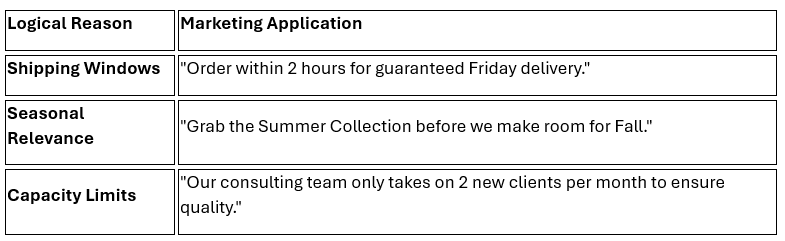
3. Use deadlines with purpose
Urgency works best when there is a logical reason behind it. Arbitrary deadlines can feel manipulative. Purposeful deadlines feel like helpful reminders.
4. The power of "exclusive access"
Scarcity doesn't always have to be about a ticking clock. It can be about exclusivity. Making a product available only to a specific segment of your audience creates a sense of belonging and value.
Strategy: Early-bird access for email subscribers.
The result: You aren't "pressuring" them to buy; you are rewarding their loyalty with a head start.
5. Lower the pressure with "the safety net"
High urgency can sometimes trigger "buyer's remorse" or anxiety. To counter this, pair your scarcity tactics with a strong guarantee.
If you tell a customer, "This offer ends tonight," follow it up with, "And if it’s not the right fit, our 30-day no-questions-asked refund policy has you covered." This removes the friction of the quick decision.
The bottom line
Urgency should act as a nudge, not a shove.
When used correctly, the psychology of scarcity helps indecisive customers take a leap they’ll ultimately be happy they took. When used poorly, it’s just noise that erodes trust.
The best marketing shouldn’t feel like marketing at all – it should feel like a timely solution.
How are you currently communicating value to your customers? Are you giving them a reason to act now, or just a reason to click away?