
Building consumer trust through marketing

When was the last time you bought something from a brand you had never heard of?
Before making the purchase, you probably did some research. You might have checked the website, looked at their Instagram, or read a few reviews. All these details help you decide whether you can trust the brand.
And trust isn’t only important when someone is making their first purchase. Think about the brands you regularly buy from. You keep going back because you trust them to meet your expectations. In this way, trust helps drive repeat purchases.
This is where marketing plays an important role. While we often think of marketing as a way to attract customers, it also shapes how customers perceive and trust your brand.
So, how can marketing help build that trust?
Show, don’t just tell
One of the easiest ways to build trust is to give customers real proof. Instead of simply telling people how great your products or services are, show them through the experiences of your customers.
For example, Dove recently launched its “r/eal reviews” campaign in 2026, by asking customers to leave unedited reviews on reddit. By giving customers a platform to share their honest opinions, Dove allows potential customers to hear directly from people who’ve used their products.
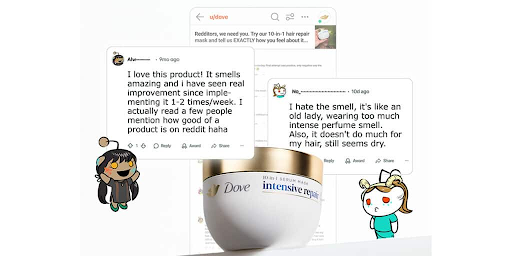
The same idea can be used in your company’s marketing. This can be through sharing customer reviews and featuring testimonials on your socials, company website or ads, including real results in your case studies and demonstrating your product’s capabilities through short videos. It helps in making your brand trustworthy and gives added credibility.
Integrate your values
Have you ever purchased something because the brand’s values aligned with your own?
When customers feel that a brand shares the same values they do, they generally feel more connected to that brand. That’s why having a clear set of values is important for a business. But simply stating those values isn’t enough. Showing them through your marketing helps customers see that these values are actually part of your brand.
For example Dove’s ongoing ‘Real Beauty' campaign reinforces its mission of promoting inclusivity and body confidence through ads featuring realistic representations of women.
Patagonia takes a similar approach with its focus on environmental responsibility. The company’s commitment to sustainability is reflected in its campaigns, promotions, and messaging. One well-known example is its 2011 “Don’t Buy This Jacket” campaign, which encouraged customers to think twice before buying, addressing the environmental impact of overconsumption.

Now, think about the values that actually matter to you and your business. Then, consider whether your customers care about these values too. Use feedback and direct conversations with your customers to understand what matters to them and whether their values align with your brand’s. Once you understand that connection, find ways to convey these shared values through your marketing. When customers see what your brand stands for, they have a reason to connect with and trust your brand.
Keep your messaging consistent
This leads us to another important part of building trust: consistency. You might show your product’s value and integrate your brand values into your marketing, but all marketing efforts need to be consistent and work together.
For example, Apple. Whether you see an Apple advertisement, visit the website, or walk into the store, the messaging, design, and overall brand experience feel connected and consistent. Apple’s marketing creates an expectation that its products will be easy to use and that customers will have access to support that they need. When customers visit the store or use the support online, these expectations are fulfilled.
Consistent messaging makes a brand look established and reliable. It plays a huge role in deciding whether customers find your brand to be trustworthy or not.
So, take a look at your own marketing. Is your brand messaging consistent across all of your social media platforms, websites, emails, and other channels? Look beyond the obvious elements like your logo and colours. Consider whether your tone, key brand message, product descriptions, promises to your customers, and calls to action are also consistent across your channels. Your content doesn’t have to be exactly the same on every platform, but customers should be able to recognize your brand and understand what you stand for.
It takes time…
Building consumer trust doesn’t happen overnight. It can develop from the multiple interactions customers have with your brand over time. Whether you’re showing real customer experiences, communicating your brand values, or keeping your messaging consistent, your marketing gives customers reasons to believe in your brand. And when customers trust your brand, they’re more likely to come back.
Need help building trust through your marketing? Let's chat! Book your free 20-minute consultation.